
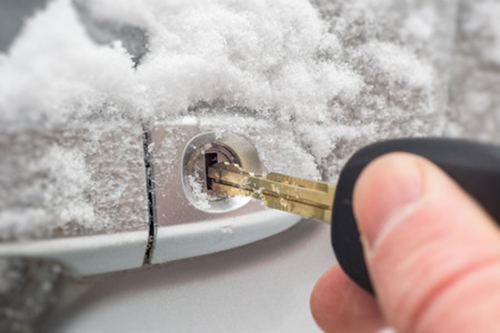
There's nothing worse than heading out on a frosty Solent morning to find your door lock frozen solid. It's a common winter call-out for us across Southampton, Hedge End and Park Gate — and the good news is that most frozen locks can be thawed at home without any harm. The trick is patience: it's force that turns a minor annoyance into a snapped key and a bigger bill.
First, the one thing not to do
Never force your key into a frozen lock or wrench it hard to turn. A frozen barrel puts the key under real strain, and worn or cheaper keys snap easily. Once a key breaks off inside, you're usually looking at lock repair or a new barrel as well as a replacement key — so slow down and thaw it first.
Safe ways to thaw a frozen lock
- Hand sanitiser — the alcohol melts ice. Smear a little on the key, ease it in and gently wiggle.
- De-icer spray — the same can you use on the windscreen works on a lock. Spray the keyway, wait a moment, then try the key.
- Warm the key — heat it in your hands, or carefully with a lighter, then slide it in to melt the ice from the inside. (Not straight after using sanitiser.)
- Hair dryer — near a socket, a hair dryer aimed at the barrel is gentle and quick.
- Body heat — cupping the lock in your hands for a minute is sometimes all it takes.
Stop it happening next winter
A little graphite powder (around £5 for 50g) puffed into the barrel keeps moisture out and stops locks freezing — it works on front doors, padlocks and car locks alike. Apply it sparingly; it's messy but it lasts. Avoid oil sprays like WD-40 as a long-term fix, as they gum up and attract grit over time.
When to call us
If your key has snapped, the mechanism won't budge, or the lock feels seized rather than simply iced, don't force it. As your local, independent locksmiths we cover Southampton and the wider Solent around the clock — call our emergency line, or pop into our Hedge End or Park Gate stores and we'll get you back in without damaging your door.